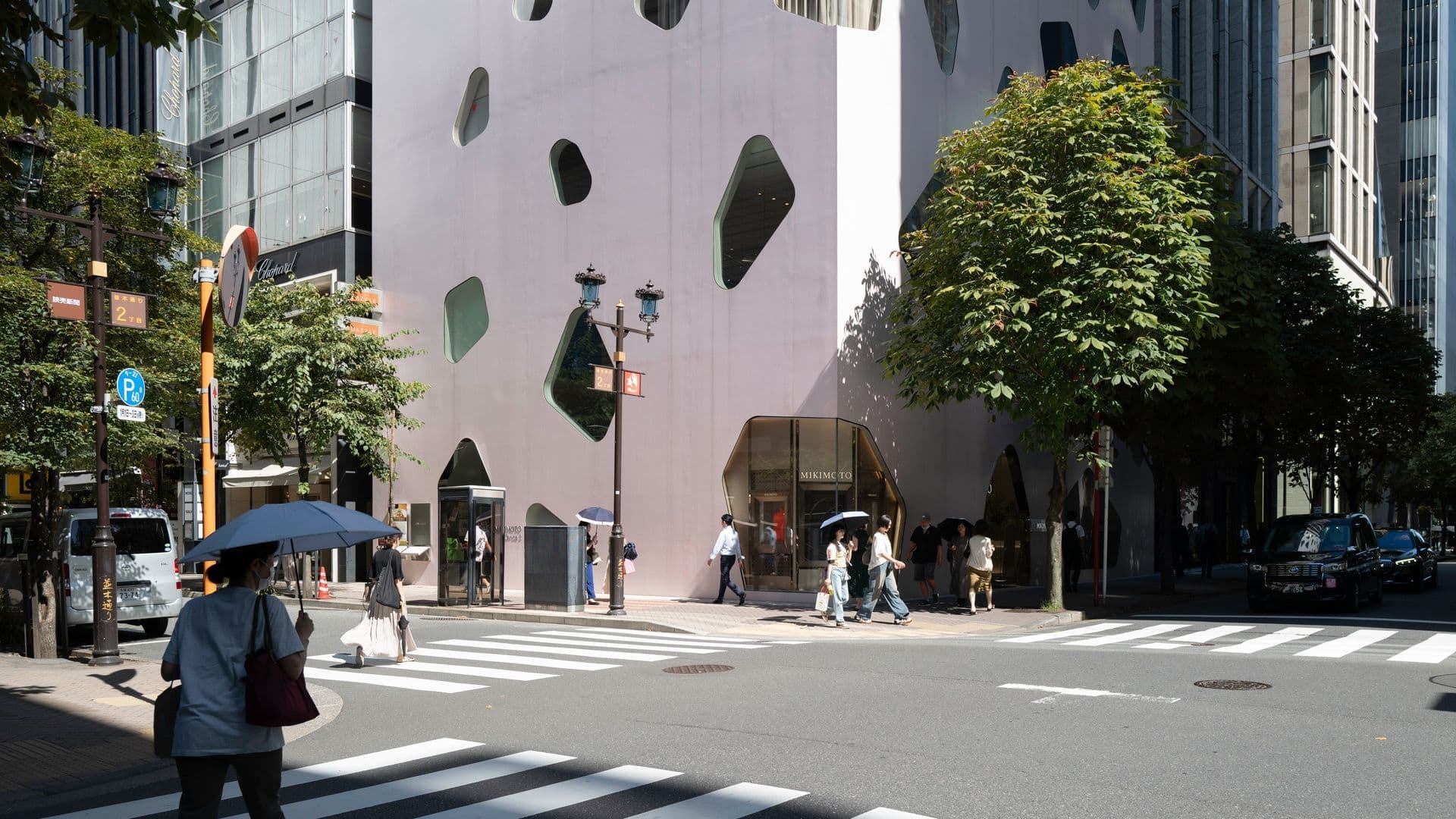
Mikimoto Building - Ginza - Toyo Ito

The Mikimoto Building, crafted by the renowned architect Toyo Ito, stands as a symbol of luxury and innovative design in the heart of Tokyo's Ginza district. Since 1893, Mikimoto has been synonymous with high-end pearls, and their head office building, completed in 2003, embodies this legacy through its cutting-edge architecture.
Discovering the Mikimoto Building: An Architectural Gem in Tokyo
Useful Links
- Detailed Exploration of the Mikimoto Building on Architectuul
- Mikimoto Building Location on Google Maps
- Official Website of Toyo Ito & Associates
Mikimoto Building: A Fusion of Art and Architecture
Luxury and Elegance Defined
Unconventional Aesthetics
Characterized by its steel and reinforced concrete structure, the building's most striking feature is its façade, adorned with irregularly shaped windows. These cutouts, reminiscent of Swiss cheese, inject a playful yet sophisticated element into the building's design.
Structural Innovation and Design
Facade as the Focal Point
Toyo Ito's concept for the Mikimoto Building revolves around a facade-suspended structure. This innovative approach results in internal spaces that are free from columns, offering a clean, unobstructed internal layout.
Swiss Cheese Effect
The arrangement of irregular windows, seemingly sporadic, combines aesthetic appeal with a complex structural system. Notably, some windows are strategically placed where columns typically would be, demonstrating Ito's architectural ingenuity.
Engineering Behind the Beauty
Robust Construction Techniques
The design's boldness required a robust structure capable of supporting freely placed openings, while also being resistant to thermal expansion. To achieve this, Ito chose a mixed system of metal plates and concrete. Steel plates, 1.2 cm thick, were anchored with a stud web to maintain a uniform depth of 20 cm, before being embedded in poured concrete.
A Testament to Innovative Design
The Mikimoto Building, with its unique facade and sophisticated engineering, not only serves as a headquarters for a luxury brand but also stands as a testament to Toyo Ito's visionary approach to architecture.